
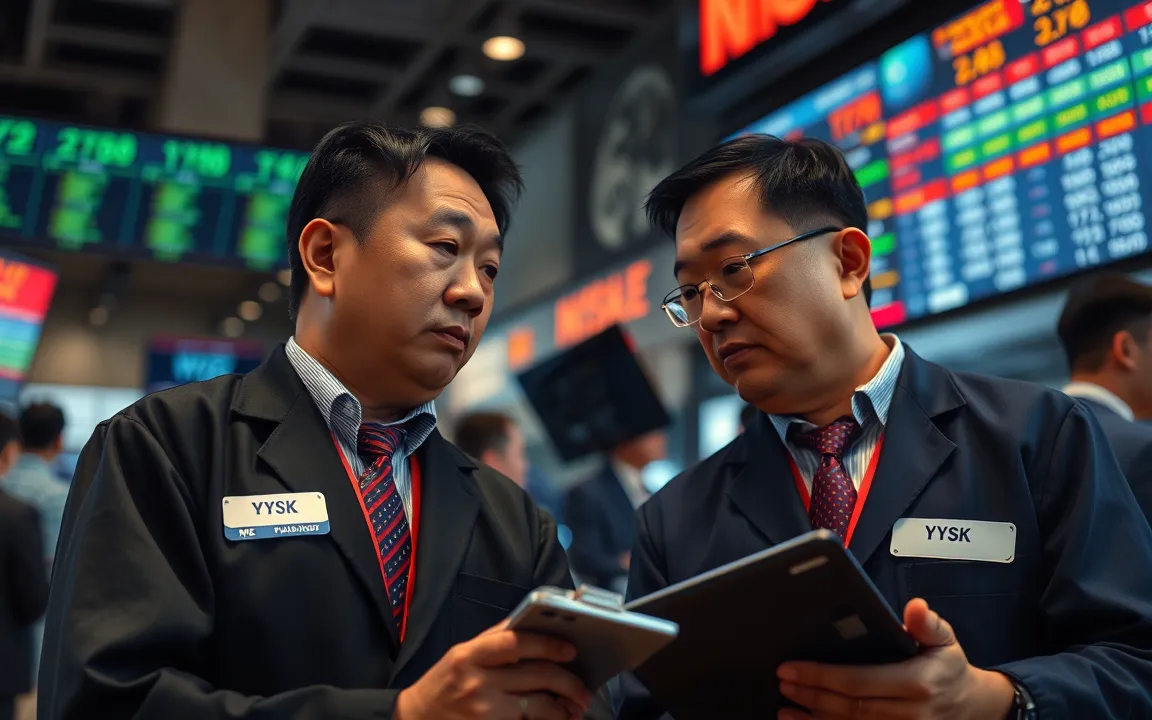
Asian stocks fell on Thursday, reversing an early attempt at gains, as hotter US inflation data and a fresh escalation in the Iran conflict pushed investors back into defensive positions and drove oil prices higher.
The mood across regional markets weakened after Wall Street suffered a sharp selloff overnight, with traders reassessing the outlook for interest rates and earnings growth.
The MSCI index of Asia-Pacific shares outside Japan dropped 1%, while Taiwan’s benchmark slid 1.5% and Japan’s Nikkei 225 fell by a similar margin.
US equity futures steadied after earlier losses, with S&P 500 e-mini contracts last up 0.2%, but the broader tone remained cautious as investors weighed the risk of a wider Middle East conflict and more persistent inflation.
Oil rises as Iran tensions deepen
The latest pressure came after the US military said it had launched a new round of strikes on multiple targets in Iran.
The move followed President Donald Trump’s warning that further attacks would come if no peace deal was reached.
Iran responded by announcing the closure of the Strait of Hormuz, a key route for global oil shipments.
Brent crude rose 3% to $95.45 a barrel in Asian trading, adding to concerns that a prolonged rise in energy prices could complicate the inflation outlook for major economies.
The rally in crude came after Brent settled 1.8% higher at $93.10 on Wednesday, when Trump’s comments had already renewed worries over supply disruption.
The inflation backdrop also gave markets little comfort.
Data released in the US showed consumer prices accelerated last month at the fastest pace since April 2023, even though the figures were broadly in line with expectations.
The S&P 500 fell 1.6% on Wednesday, while the Nasdaq Composite lost 2%.
Tech rally faces a valuation test
The selloff has hit some of the region’s biggest recent winners, particularly markets linked to technology and artificial intelligence.
Strategists said Asian equities that had rallied strongly over the past two months looked increasingly vulnerable as investors questioned whether earnings expectations had run too far ahead.
The analysts said that stretched valuations and aggressive growth assumptions had left Korea, Taiwan and the Asian tech sector exposed to a reversal.
South Korea’s KOSPI swung between gains and losses as investors searched for a floor after five declines in six sessions. The index was last down 1.2%, having earlier fallen as much as 4.4%.
AI-linked shares found some support, but the wider sector remained under pressure after Oracle dropped 8.9% in extended US trading.
The company forecast fiscal 2027 capital spending above Wall Street estimates and said it planned to raise nearly $40 billion through debt and equity financing, intensifying investor focus on the cost of building AI infrastructure.
Dollar steady before ECB decision
European futures pointed to further weakness at the open. Pan-regional contracts fell 0.8%, German DAX futures lost 0.6% and FTSE futures slipped 0.9%.
In currencies, the euro edged up 0.1% to $1.1546 ahead of the European Central Bank’s policy decision.
Markets widely expect the ECB to raise interest rates, keeping attention firmly on central banks as inflation pressures persist.
The dollar index held steady at 100.03, staying within its narrow range of the past week. Safe-haven demand has supported the greenback as tensions between the US and Iran have escalated.
Rate traders also moved slightly closer to pricing another Federal Reserve hike.
Fed funds futures implied a 51.6% chance of a rate increase at the Fed’s October 28 meeting, compared with expectations a day earlier that leaned narrowly towards no move until December.
The US 10-year Treasury yield rose 1 basis point to 4.5483%.
Elsewhere, bitcoin gained 0.4% to $62,013.58 and ether rose 0.3% to $1,634.13, stabilising after a broader selloff in speculative assets.
Gold slipped 0.4% to $4,055.55 as the dollar held firm.
The post KOSPI tumbles as Asian markets face fresh Iran shock and oil spike appeared first on Invezz
