
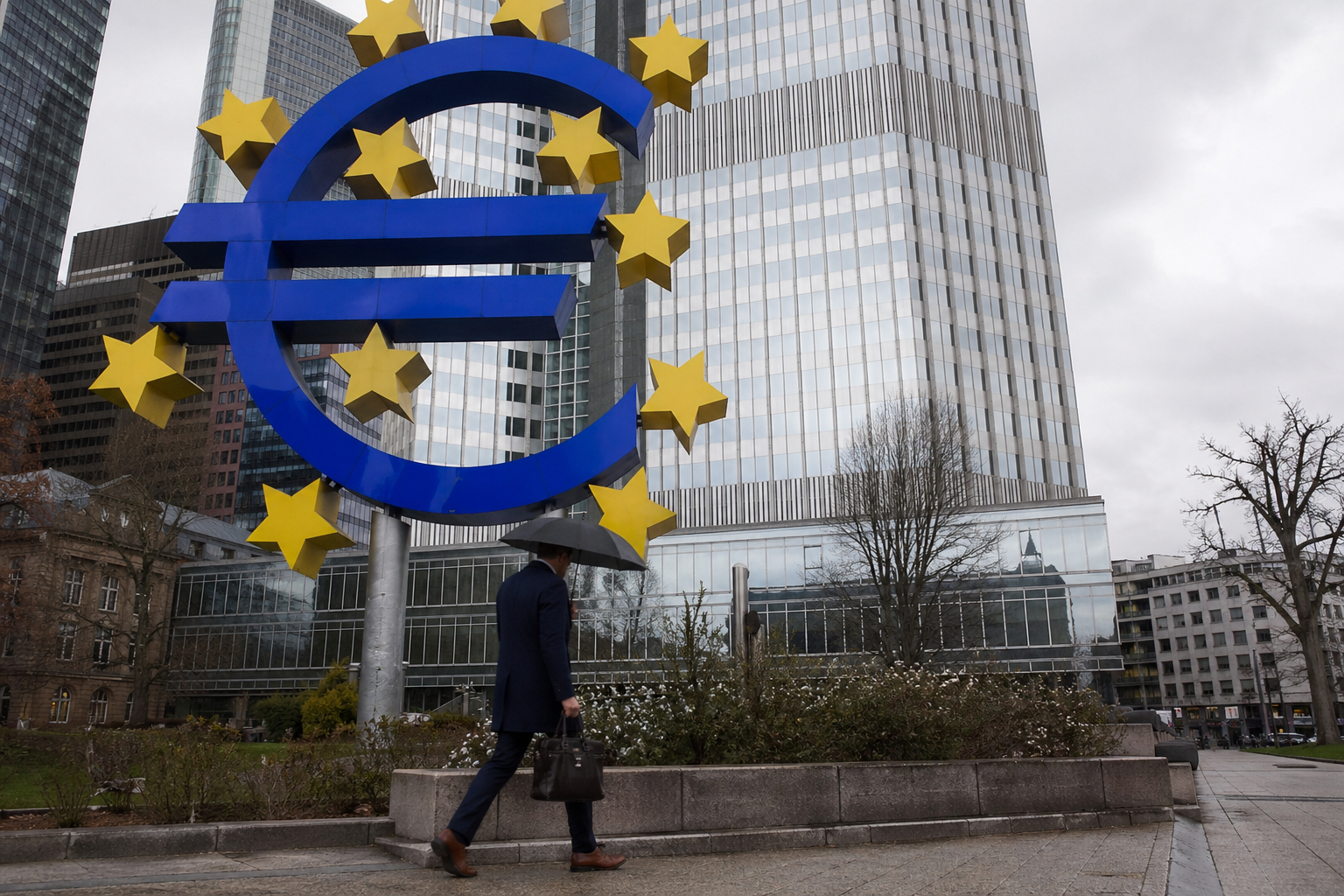
The euro zone economy recorded weak growth in the first quarter of the year, offering an early indication of economic conditions following the onset of the Iran conflict.
A preliminary estimate released on Thursday showed that economic activity in the bloc expanded only marginally, reflecting growing pressures from geopolitical tensions and trade disruptions.
The energy-importing euro zone is considered particularly vulnerable to supply disruptions, especially those affecting oil, gas, and other shipments passing through the Strait of Hormuz.
These disruptions began in late February and have raised concerns about the region’s economic resilience.
GDP growth falls short of expectations
Data from Eurostat showed that gross domestic product across the 21-country currency area rose by 0.1% quarter-on-quarter in the three months to March.
This figure fell short of economists’ expectations and marked a slowdown compared to the previous quarter, when growth stood at 0.2%.
The latest data suggests that the euro zone economy is losing momentum, with growth remaining fragile amid mounting external pressures.
Surveys point to further slowdown
A series of business surveys released this week indicates that economic conditions may continue to weaken in the coming months.
Business sentiment has deteriorated across the bloc, with services activity slowing and corporate profits declining.
Exports remain under pressure due to ongoing tariff-related challenges, further weighing on overall economic performance.
Banks have also reported tighter credit conditions, signalling reduced access to financing for businesses and households.
This tightening could further dampen investment and consumption, adding to the slowdown.
Energy risks complicate inflation outlook
The subdued economic backdrop presents a complex challenge for the European Central Bank (ECB), particularly as inflation pressures begin to rise again.
The increase in inflation is being driven largely by energy costs, linked to ongoing geopolitical tensions and supply disruptions.
This combination of weak growth and rising inflation creates a difficult policy environment for the ECB, which must balance the need to support economic activity while containing price pressures.
Markets expect rate hikes despite weak growth
Despite the fragile economic outlook, the ECB is widely expected to keep interest rates unchanged in its upcoming policy decision on Thursday.
However, market participants are already anticipating tighter monetary policy in the months ahead.
Financial markets are pricing in three to four rate increases over the coming year.
This expectation reflects concerns that persistent inflation could force the ECB to act, even as economic growth remains subdued.
Overall, the latest data highlights the growing challenges facing the euro zone economy, with geopolitical tensions, trade disruptions, and tightening financial conditions all contributing to a weaker outlook.
The post Euro zone growth slows to 0.1% as ECB faces energy risks appeared first on Invezz
