
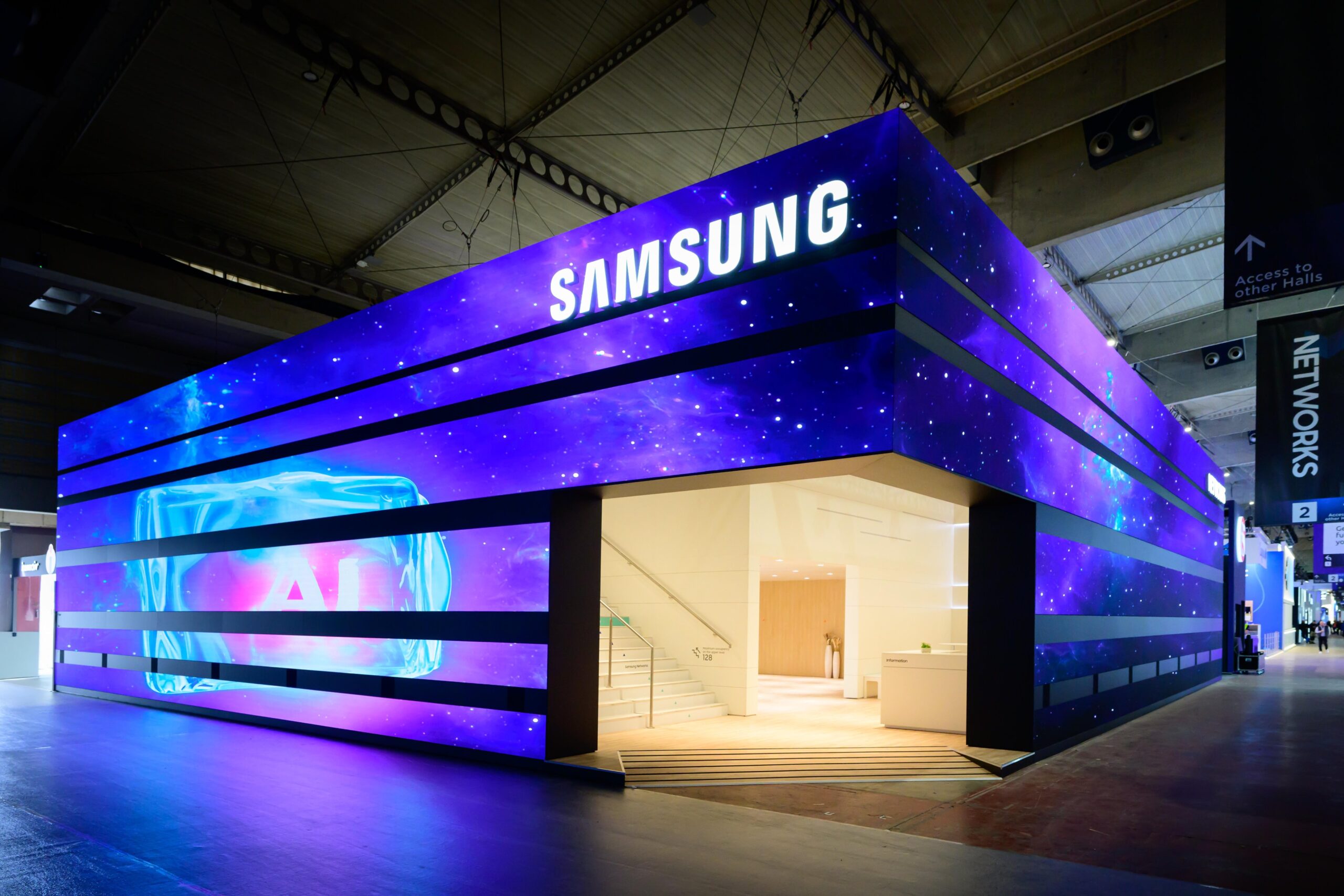
Samsung Electronics and SK Hynix shares rebounded on Wednesday after several sessions of losses, as Nvidia’s stronger-than-expected earnings helped restore confidence in the artificial intelligence trade.
Samsung Electronics climbed 2.31% to close at 194,700 won, while SK Hynix advanced 4.19% to 1.14 million won.
The gains followed a difficult start to the week. SK Hynix had fallen for four consecutive sessions, while Samsung had been in the red for three straight sessions.
The rebound helped lift South Korea’s benchmark KOSPI, which rose 1.99% to finish at 5,067.44, reclaiming the 5,000 level after slipping below it in the previous session.
The junior KOSDAQ index also advanced, gaining more than 2% in early trading and holding on to its gains through the close.
Nvidia results revive confidence in AI demand
Controversy-hit Nvidia, the dominant supplier of AI accelerators, reported fiscal third-quarter revenue of $115.8 billion, more than double its year-earlier figure and above analyst estimates of roughly $109 billion.
Adjusted earnings per share came in at $2.68, beating the consensus estimate of $2.47.
Nvidia expects revenue of approximately $130 billion in the quarter ending in January.
The forecast exceeded analyst expectations and suggests that demand for the company’s AI chips and computing systems remains strong.
The company also expects a gross margin of around 71.5% in the quarter.
The results reinforced expectations that demand for AI computing infrastructure remains robust, despite recent uncertainty surrounding the company’s leadership.
They also provided relief for South Korea’s two largest memory chipmakers, which occupy a central position in the AI supply chain.
Samsung and SK Hynix are leading producers of high-bandwidth memory (HBM), a specialized form of DRAM stacked alongside processors to deliver the high data throughput required by modern AI training and inference systems.
SK Hynix has long been Nvidia’s primary HBM supplier, while Samsung has been expanding its market share and securing additional contracts with other AI chip designers.
“Nvidia’s results were reassuring and gave investors a reason to refocus on earnings, but they haven’t resolved the broader questions around AI spending returns, financing sustainability and leadership uncertainty,” said Charu Chanana, chief investment strategist at Saxo Bank in Singapore told Reuters.
“So we are seeing an initial relief rally, but not necessarily the conviction needed for a sustained recovery.”
Seo Sang-young, managing director of Mirae Asset Securities, told Maeil Business Newspaper that concerns remained over delays in data-center investment, weakness in US AI and semiconductor stocks, and export restrictions. However, he said the impact was limited because those concerns had already been reflected in the market.
Asian markets mixed
The rebound in South Korean chip stocks came as broader Asian markets showed a mixed response to Nvidia’s results.
Japan’s Nikkei 225 traded between modest gains and losses to close marginally higher, while Hong Kong’s Hang Seng finished lower. China’s Shanghai Composite also see-sawed to remain flat.
Taiwan’s Taiex also showed early strength before giving back some of its gains.
Meanwhile, US stock index futures pointed higher during Asian trading.
S&P 500 futures rose around 0.25%, while Nasdaq-100 futures gained 0.68%, suggesting that Nvidia’s results could help stabilize the recent sell-off in technology shares.
AI disclosure: AI tools assisted with research and drafting of this piece. An Invezz editor reviewed the facts, sources and wording before publication. Any opinions or analysis are Invezz’s, not those of an automated system.
The post Why Samsung, SK Hynix shares rebounded on Wednesday? appeared first on Invezz
